Showing posts with label books. Show all posts

6.19.2017

april + may books


1. Love in the Time of Cholera by Gabriel García Márquez

In the span of a month, I had three people (two strangers!) tell me this was their favorite book, so I took that as a sign I should read it. The novel chronicles the forbidden young love of Florentino Ariza and Fermina Daza, the latter whom eventually marries another man, a doctor, after much persuasion from her father. Márquez contrasts Dr. Urbino—a modern, rational man—with the wild and emotional love of Florentino Ariza, who remains devoted (albeit with quite a number of trysts) to Fermina Daza, even into old age. I don't know if I would say Love in the Time of Cholera is my favorite book, but definitely worth the read.


2. Playing in the Dark: Whiteness and the Literary Imagination by Toni Morrison

I'll let Toni Morrison sum it up: "These speculations have led me to wonder whether the major and championed characteristics of our national literature—individualism; masculinity; social engagement vs. historical isolation; acute and ambiguous moral problematics; the thematics of innocence coupled with an obsession with figurations of death and hell—are not in fact responses to a dark, abiding signing Africanist presence. It has occurred to me that the very manner by which American literature distinguishes itself as a coherent entity exists because of this unsettled and unsettling population."


3. Duino Elegies by Rainer Maria Rilke, trans. by Edward Snow

It has been awhile since I carried around Rilke (Book of Hours) in my bag everywhere I went, and I thought I had 'outgrown' him, worn him out along with every other like-minded student at my college. Duino Elegies reminded me that I will never outgrow Rilke. I keep coming back to these words, especially: "Here is the time for the sayable, here is its home. / Speak and attest."


4.  Putting Art (Back) In Its Place by John Skillen

I was glad to read this delightful and necessary book by a friend and mentor. Focusing on the visual culture of medieval and Renaissance Italy, Skillen argues how art in lived spaces guides communities together into their shared calling. With ample examples and a call for the contemporary Church to return to this model, Skillen evades falling into nostalgia—though at times it seems his target audience is a first-year college student with little understanding of liturgy or history.


5. The Sabbath by Abraham Joshua Heschel

A quick, simple read—Heschel writes like a poet: "The meaning of the Sabbath is to celebrate time rather than space. Six days a week we live under the tyranny of things of space; on the Sabbath we try to become attuned to holiness in time. It is a day on which we are called upon to share in what is eternal in time, to turn from the results of creation to the mystery of creation; from the world of creation to the creation of the world."

4.26.2017

march books


Last month's books, even as we are nearing the end of this month:


1. The Fire Next Time by James Baldwin

I bought this after seeing the recent documentary about James Baldwin, and I wish I would have read it sooner. It is sharp and convicting and beautiful. Baldwin's central point is that "whatever white people do not know about Negroes reveals, precisely and inexorably, what they do not know about themselves." Baldwin's call is to unmask ourselves and to face the reality of the racial nightmare in America: "We are capable of bearing a great burden, once we discover that the burden is reality and arrive where reality is." Baldwin's words have given me ways of thinking about what it means for me to be white in America today—which says something for the truth of his diagnosis, seeing that it is some fifty years since the original publication.


2. Red Brick, Black Mountain, White Clay: Reflections on Art, Family, and Survival by Christopher Benfey

I read this during a quick weekend trip to visit friends in Asheville: a memoir and travelogue by the great-nephew of Josef and Anni Albers. It was exciting to read about Black Mountain College while in those particular mountains, and to learn more about the history of a place that has long-fascinated me. While at times the narrative gets lost in Benfey's rather uninteresting family history, Benfey's writing is at its best when he talks about the nature of ceramics, and the way clay, like no other medium, must be surrendered to the laws of nature. The handle on a ceramic pot, Benfey writes, "marks the journey from one world to the other; it is the suspension bridge from the world of art to the world of use.”


3. Autobiography of Red by Anne Carson

What a delightfully strange book! I am still not sure what to make of it, though I think I could spend a full day thinking about nearly every line of this epic poem. I am speaking of phrases like this: "Reality is a sound, you have to tune in to it not just keep yelling," or this: "the skin of the soul is a miracle of mutual pressures." I suppose this is what I was supposed to feel after reading it, since the poem begins with the suggestion that "Words bounce. Words, if you let them, will do what they want to do and what they have to do." Anne Carson certainly lets words do what they have to do in such a way that they stick with you, even while the plot lost me at times (likely due to my needing a refresher on Homer so I could understand all the references).

3.07.2017

february books


1. White Teeth by Zadie Smith

As others have noted, it's difficult to describe the plot of this novel in just a few sentences—it's a saga that follows two immigrant families from Bangladesh and Jamaica, eventually culminating in the stories of their children growing up in London. Maya Jaggi writes in The Guardian: "[The novel's] characters embrace Jehovah's Witnesses, halal butchers, eugenicists, animal-rights activists and a group of Muslim militants who labour under the unfortunate acronym KEVIN;" basically, there's a lot going on in this book. I found myself only truly invested in the novel come the second half, but it was certainly worth getting there. Smith wrote it when she was twenty-four years old and that in itself is staggering. (Also, she and her husband have to be the most attractive people.)


2. Voyage of the Sable Venus and Other Poems by Robin Coste Lewis

By far the best book I read this month, and I wish I would have read it sooner. The title poem is comprised "solely and entirely of the titles, catalog entries, or exhibit descriptions of Western art objects in which a black female figure is present, dating from 38,000 BCE to the present." Lewis writes that the poem, some seventy pages in length, "is not about my imagination; it’s about the failure of white imagination. It’s about the pathology of whiteness. Whiteness is the heart of darkness." While "The Voyage of the Sable Venus" centers the book—literally and metaphorically—the additional stand-alone poems particularly caught my attention. It has been a long while since I have read a new poet that I have loved so much.


3. Bird by Bird: Some Instructions on Writing and Life by Anne Lamott

I really only picked this up because I was slugging through Judith Butler's Gender Trouble and I needed a break, and this book was laying around in my near-sight and seemed like an easy read. I've read bits and pieces of it in creative writing classes in the past, but never the whole book front-to-back. Anne Lamott is the sort of person that I want to be: always ready with a perfectly-humored story to illustrate a point.

Also, this is fun: Girls at Library.

2.03.2017

january books


1. The Story of the Lost Child by Elena Ferrante

I finally finished the Neapolitan Novels (about a year after everyone else) and I cannot get them out of my mind. I have started thinking of people in my life in terms of characters in the novels (i.e. he's being so Pietro right now). But more than that, I cannot get out of my mind the sort of "literary truth" that Ferrante speaks of in her interview with The Paris Review, the sense of unapologetic honesty in the world she creates, and particularly in the character of Elena. To be that intimate with a female mind felt like an awakening to my own mind, my own anger, fear, and desire that I often avoid confronting. I still have much more to process about these books.


2. Netherland by Joseph O'Neill

If I hadn't also read Ferrante this month, Netherland would be without a doubt the best book I read (and possibly still is). I started it knowing little about it except that it gestured towards The Great Gatsby while being set in post-9/11 NYC. The novel is narrated by Hans van den Broek, who finds himself in NYC with a failed marriage and "an instinctive recognition of an awful enfeebling fatalism, a sense that the great outcomes were but randomly connected to endeavors, that life was beyond mending, that nothing worth saying was sayable, that dullness was general, that disintegration was irresistible." You get the point. The story masterfully investigates the nature of despair and loss, and O'Neill's prose itself is worth the read.


3. Hammer Is the Prayer: Selected Poems by Christian Wiman

For a poet who doesn't believe in collected poems—because of how rare good poetry is—it is a funny thing to read their own collection of selected poems. Though I have read many of them before, it was a strange comfort to return to these poems, a sort of familiar space. I was especially delighted to re-read "Small Prayer in the Hard Wind," "2047 Grace Street," "We Lived," and "Hard Night."


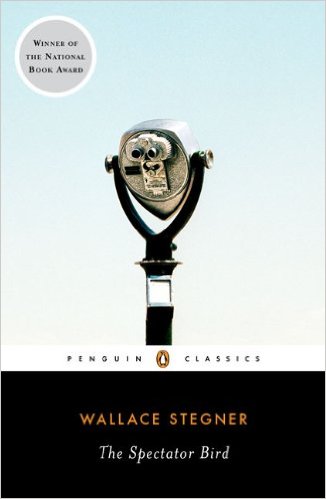
4. The Spectator Bird by Wallace Stegner

A kind friend sent this book to A. and I over Christmas, having just read it himself. Not too unlike Hans in Netherland, the narrator of The Spectator Bird finds himself facing old age having fallen into a profession he did not want and a marriage that has become dull, not to mention that his only son died as a young man and left him without ancestors or descendants. Striving to find meaning in life, he returns to an old journal he kept while traveling to Denmark, which forces him to confront whether or not he had "gone through adult life glancing desperately sidelong in hope of diversion, rescue, transfiguration." He refused his one chance at just such a transfiguration, and in doing so, realizes that commitments—though not without pain—trump impulses.


5. Literacy and Justice Through Photography: A Classroom Guide by Wendy Ewald, Katie Hyde, and Lisa Lord

I am taking a course on the Literacy Through Photography curriculum this semester and couldn't be happier about it. We are reading this classroom guide and using it with students in Durham Public Schools. I have been a long-time fan of LTP and am excited to finally have a chance to get some hands-on experience. This is a great resource that I am sure I will keep returning to over the years.